When Indian Men’s Rights Movement got online in 2004-2005, by then many feminists were thoroughly using the Indian epic Ramayana to degrade Ram and lakshman. They were asking, “Why was Lakshman so disrespectful to women than he cut off Surpanakha’s nose? He could have been more lenient to her.”
In a movie called FIRE with two lesbian protagonists, feminists had taken many potshots at Ramayana. Seema Sirohi, a feminist had written a book called,”Sita’s Curse: Stories of Dowry Victims.” In Ramayana, Sita is Ram’s wife and feminists were equating her with so called victims of dowry abuse. Another feminist Sreemoyee Piu Kundu had written a feminist erotica called, Sita’s curse: The Language of Desire.
With emergence of Men’s Movement, we the MRAs, started highlighting negative roles played by female characters like Kaikeyi and Surpanakha in Ramayana. We lamented unfortunate death of King Dasaratha. We termed Kaikeyi’s treatment of her husband as domestic violence on man and property grabbing.
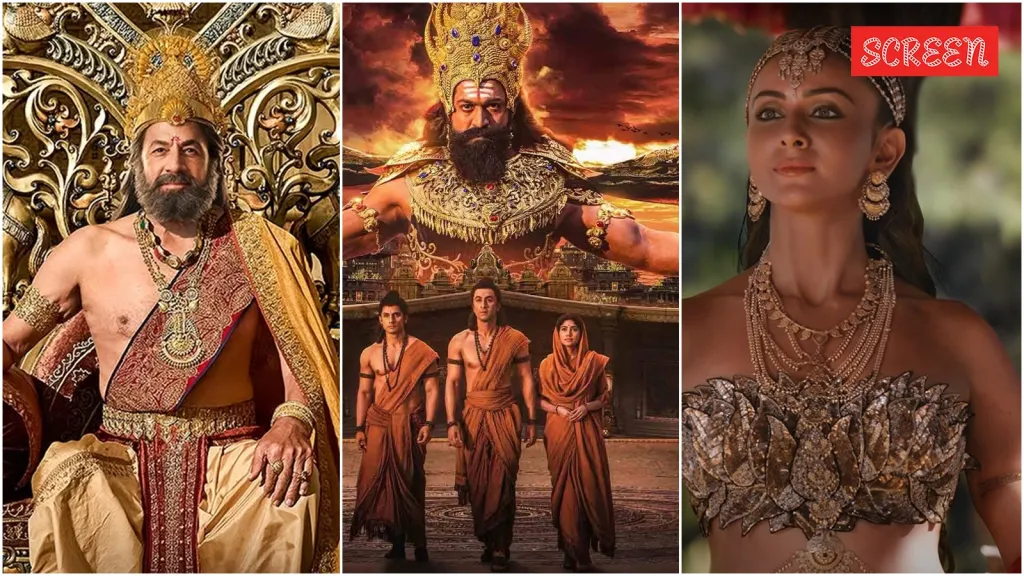
This movie Ramayana: Rise of a Legend is now second among top-grossing movies globally for the weekend of November 6–8, 2026. It has made an estimated $55.7 million worldwide opening compared to $60 million by Godzilla Minus Zero. While it has awesome CGI and great music by Hans Zimmer (and AR Rahman), many viewers can struggle a bit without the background of characters and the story outlines.
Using AI, we have captured the brief details about numerous characters and how the stage is set for the conflict.
Plot and Characters of Ramayana: Rise of a Legend
(Spoilers alert: Do not read the content below, if you hate to go through the spoilers)
The Fall of the Asuras: The movie opens by describing the eternal conflict between the Devas and the Asuras. When the Devas (led by Indra, warrior king of Devas riding on a flying elephant) defeat and kill the Asura leader Sumali, the Asura community is banished and left stripped of their home and dignity.
Kaikasi’s Vengeance: Ravana’s mother, Kaikasi (daughter of Sumali), urges her young son—then known as Dashanan (meaning “ten-headed”)—to restore his people’s lost glory and avenge their defeat. Kaikasi also has two other sons and a daughter (who will play important roles later in the story).
Penance and Invincibility: Dashanan embarks on years of intense meditation and penance directed to Lord Brahma, earning boons of immense strength, near-immortality, and invincibility.
Rise in Lanka (Sri Lanka): Armed with these new powers, Dashanan overpowers Deva rule, reclaims Lanka (by defeating soldiers of his half-brother Kubera), and transforms it into a wealthy, fortified golden city for the Asuras, positioning himself as a messiah-like savior to his people.
He reunites his family in Lanka, marries Mandodari, and systematically expands his domain by subjugating surrounding human and netherworld realms before turning his ambitions toward the realm of the gods.
Ravana’s primary allies, family members, and associates who shape his power and actions in the first part of the epic include:
Maricha: A key shape shifting Asura ally and uncle/relative who initially warns Ravana about the threat of Lord Vishnu’s human avatar (Ram), but later aids Ravana by transforming into a golden deer to kidnap wife of Ram.
Mandodari: Ravana’s queen and wife.
Kumbhakaran: Ravana’s giant, powerful brother, who by nature wakes up for just one day after sleeping for 6 months.
Surpanakha: Ravana’s sister. Her brother arranges her marriage to King Vidyutjihva to merge both their kingdoms.
Vibhishan: Ravana’s younger brother, a principled man, who later turns against his own brother Ravana.
Lord Shiva: While Shiva is a deity rather than a political ally, Ravana is depicted as one of his greatest and most devoted worshippers, anchoring Ravana’s spiritual arrogance and near-invincibility.
Story of Ram:
Lineage: Ram is the eldest prince of Ayodhya, born to King Dasharatha and Queen Kausalya of the Solar dynasty (Ikshvaku). King Dasharatha has three wives (Kausalya, Kaikeyi and Sumitra).
Siblings: He grows up with his half-brothers Lakshman, Bharat, and Shatrughna, trained in martial arts, ethics, and royal duties.
Early Deeds: Under the guidance of Sage Vishwamitra, young Ram leaves the palace to protect forest sages by defeating demons such as Tataka and Subahu.
Mithila: Traveling to the kingdom of Mithila, Ram participates in a swayamvara (a ceremony of a princess choosing a husband) hosted by King Janaka.
The Bow of Shiva: Ram strings the divine bow of Lord Shiva and ends up breaking it, winning the hand of Sita (Janaka’s daughter).
Return to Ayodhya: The couple marries and returns home to a period of celebration, with King Dasharatha preparing for Rama’s coronation as crown prince.
The Confrontation: Parashuram—an earlier avatar of Lord Vishnu—confronts Ram in King Janak’s court out of anger over the destruction of Shiva’s sacred bow.
Resolution: Instead of escalating into violence, Rama responds with humility and respect, recognizing Parashuram’s stature. Parashuram in turn realizes that Ram is the new-era avatar of Vishnu, completing the transition of power and eras.
Jatayu: Jatayu is a divine bird and demi-god, revered as the King of Vultures. In the epic, Jatayu was an old, loyal friend of King Dasharatha, Lord Ram’s father. He appears in numerous scenes and gets killed in the last fight scene in part 1 of the movie.
The Exile
The Heir Apparent: King Dasharatha of Ayodhya decides to crown his eldest and most virtuous son, Prince Rama, as king.
Kaikeyi’s Boons: Pressured by her wicked maid Manthara, Ram’s stepmother Kaikeyi invokes two past promises (boons) granted to her by Dasharatha:
-
- She demands that her own son, Bharat, be crowned king instead.
- She demands that Rama be banished to the forest for 14 years.
Ram’s Choice: Bound by his father’s honor and duty (dharma), Ram willingly accepts the exile without anger or regret, choosing to walk away from the throne.
Joining the Journey: Ram is accompanied into the forest by his devoted wife, Sita, and his loyal younger brother Lakshman.
The Grief of Ayodhya: King Dasharatha is left shattered by grief and guilt over sending his beloved son away, passing away shortly after their departure.
Ravana Kills his Brother-in-law: Before the physical clash, Ravana encounters an arrogant Vidyutjihva pushing a servant to the ground, and Ravana pointedly steps in to help the servant up, followed by a tense moment where Ravana lectures Vidyutjihva about power and ego.
The Duel: The sequence features grounded, intense choreography and a heavy war-drum background score (part of the film’s musical score by A.R. Rahman and Hans Zimmer). Ravana overpowers and kills Vidyutjihva during the conflict, setting off a bitter fallout with Surpanakha, who is subsequently politically exiled to the Dandaka forest.
The Approach and Rejection: A widowed Surpanakha encounters Ram, Sita, and Lakshman in the forest. She tries to win over Ram and proposes to marry him. Ram politely declines her advances, explaining his devotion and fidelity to his wife Sita. After being rejected, she turns aggressive toward Sita, prompting Lakshman to intervene and cut her nose to protect Sita.
Confrontation and aftermath: After Lakshmana cuts off Surpanakha’s nose, rather than immediately running straight to Ravana to complain and describe Sita’s beauty, she instead dispatches her own army to fight Ram and Lakshman.
Appeal to Ravana: She appeals to her brother with legitimate grievances over her insult and humiliation, which—combined with describing Sita’s extraordinary beauty—acts as the primary emotional and strategic catalyst for Ravana to plan his vengeance and the subsequent abduction of Sita.
The part 1 of the movie ends with Ravana abducting Sita. Jayatu, the old divine bird tries to stop him and gets killed by Ravana. Much bigger conflict and war awaits for the viewers in Part 2 of the movie.